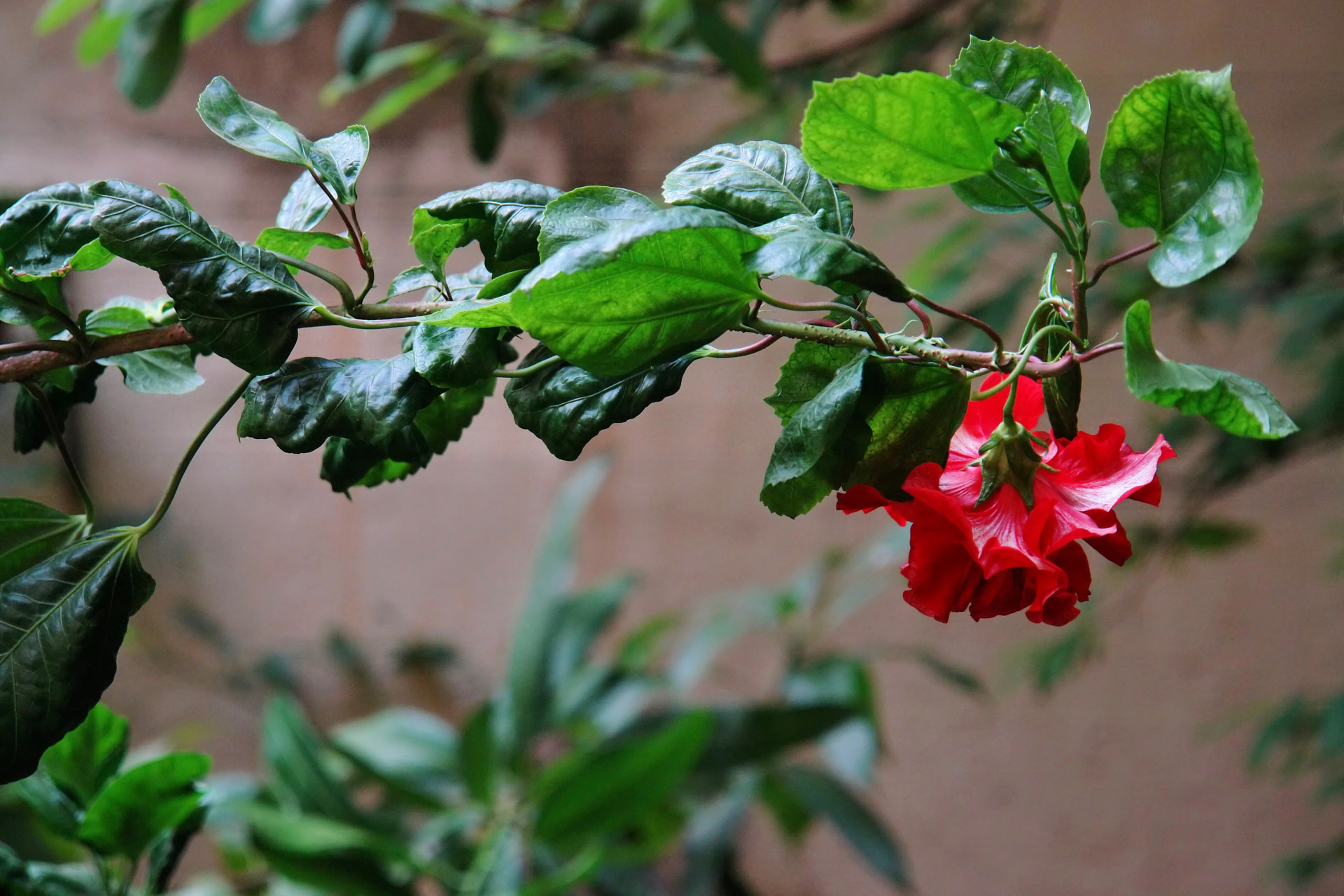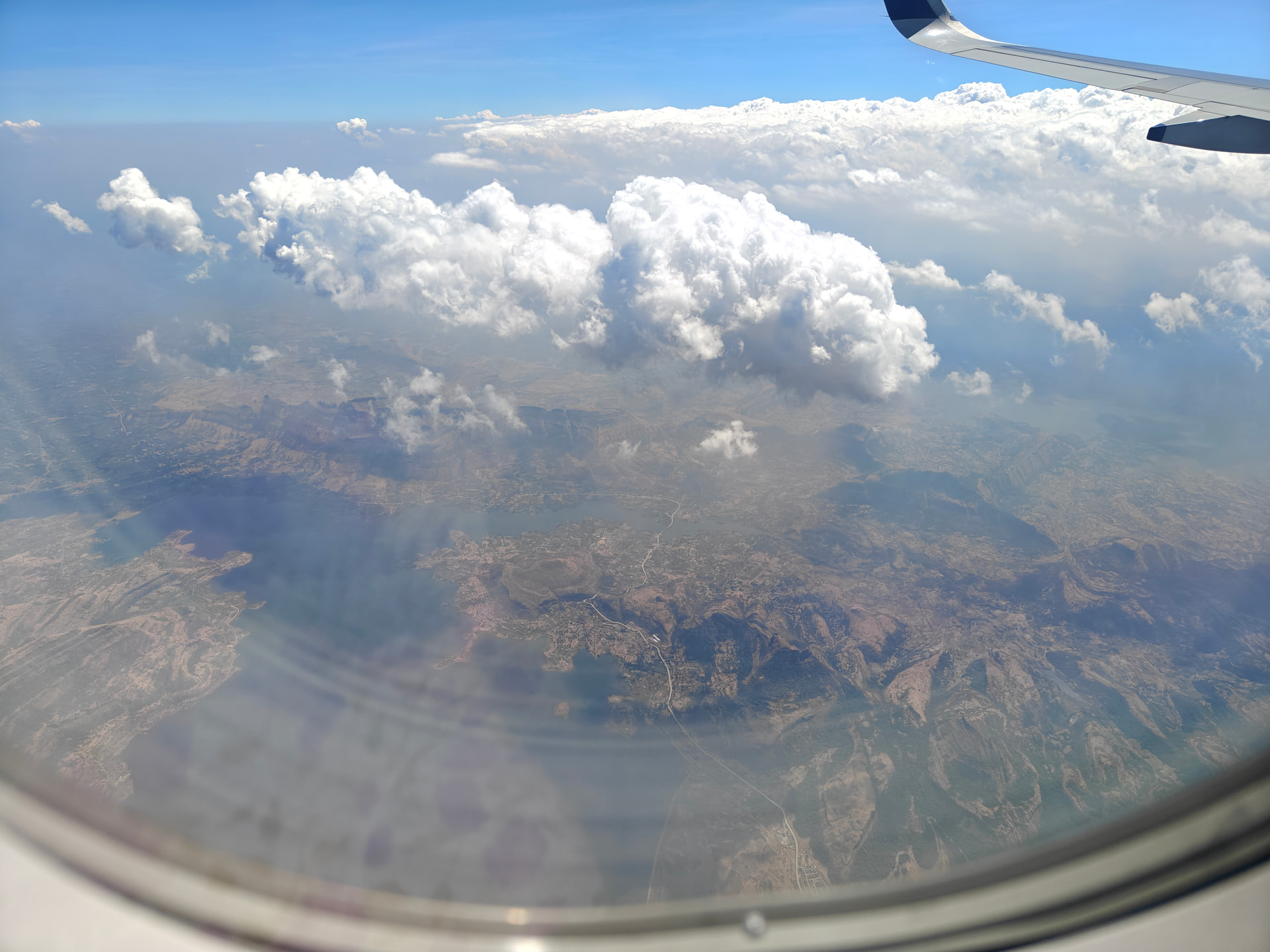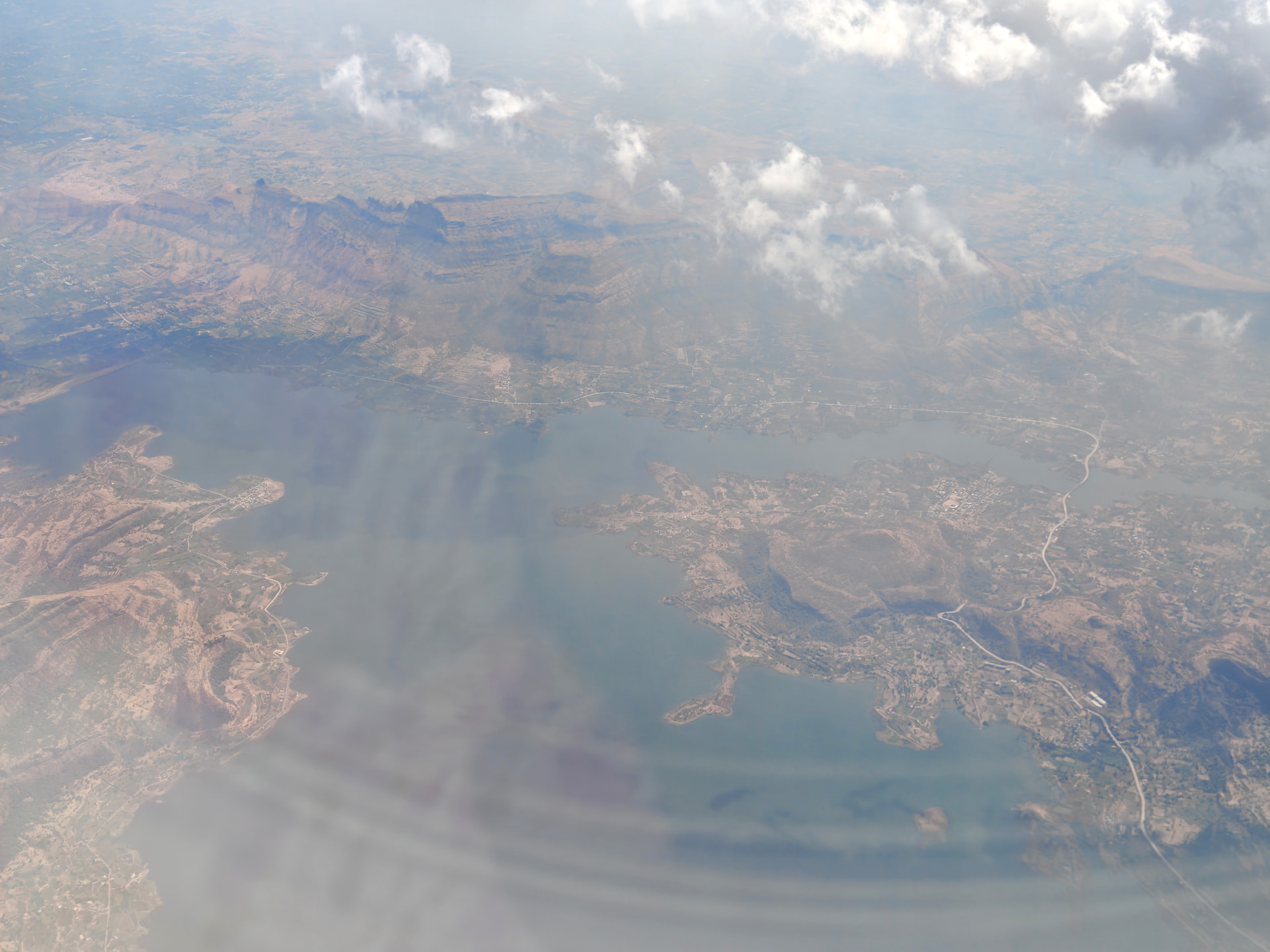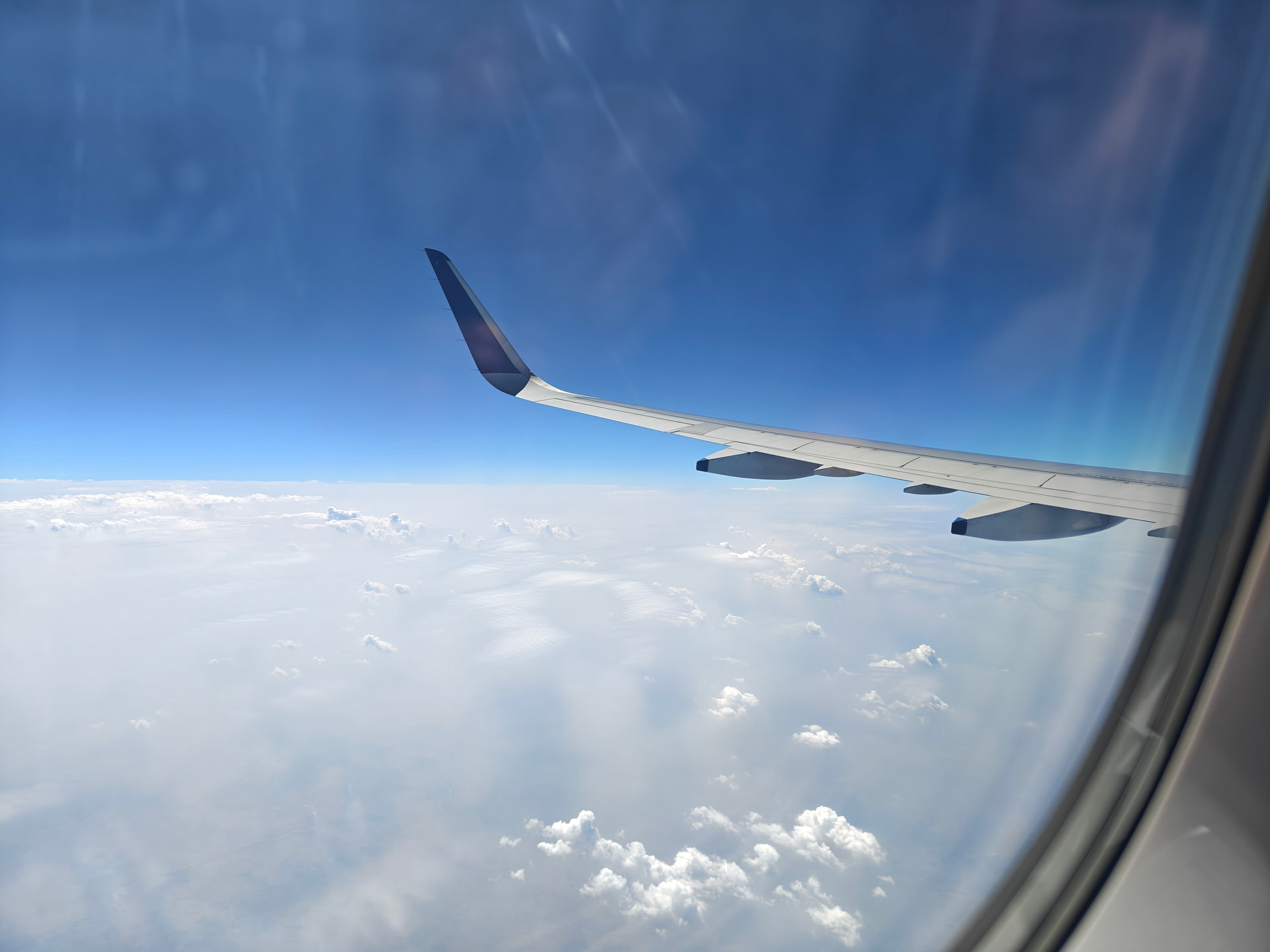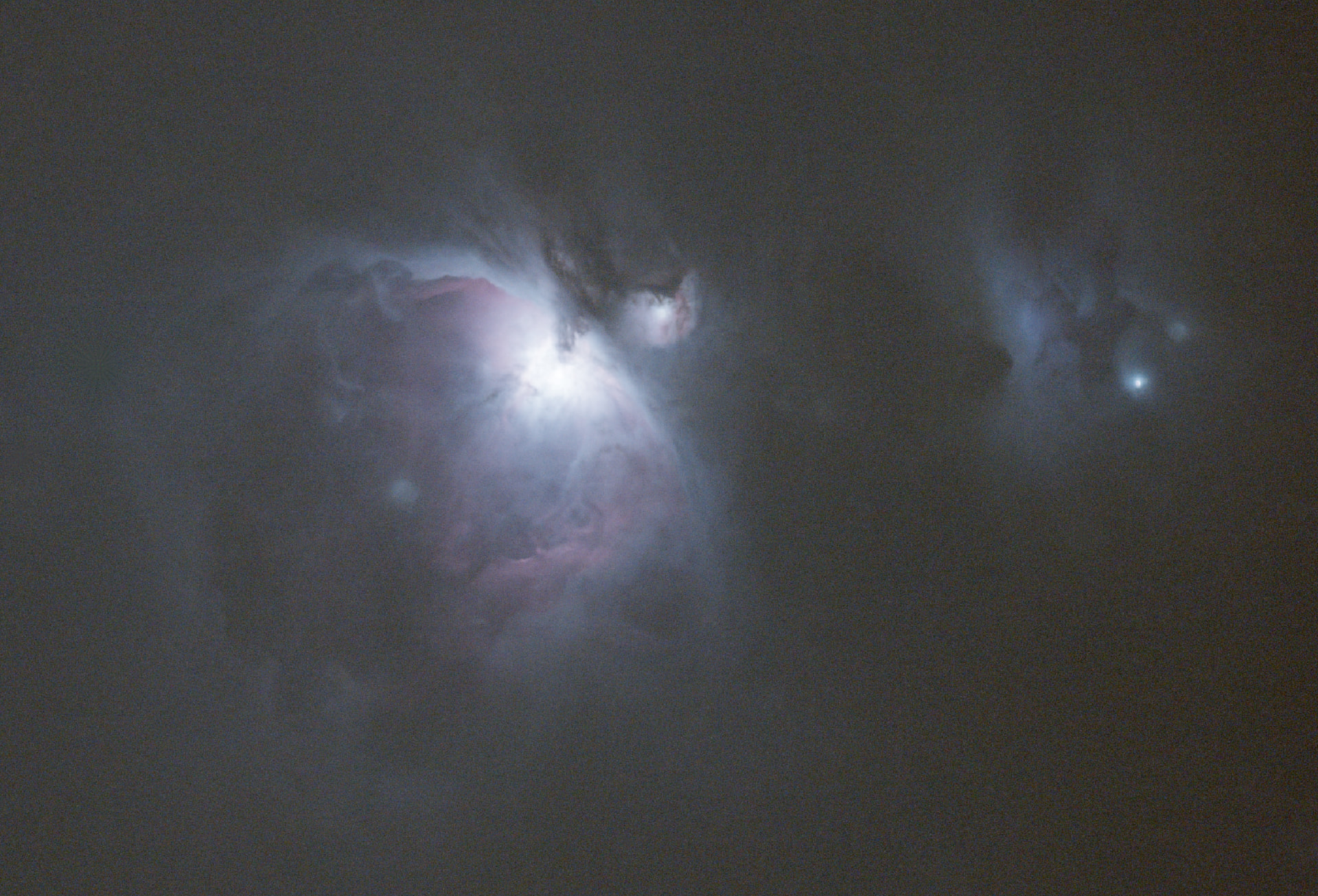
At 300mm f/4 with M43 sensor.
7 Likes
Amazing stuff all! How did I miss this thread! 
What is that? Also which camera and lens? Settings? I have 3 m43 bodies but max 42.5mm focal length (85mm FF eg), can I still shoot something like this?
This is sooo good. How did you do it? Where did you do it? I would love to try my hands too.
You could do it, if you check the post which I replied to, it was shot with a 85mm full frame lens. Just that it won’t be zoomed in like this. Camera doesn’t matter for the most part, as it’s a stack of ~100 images done in Siril, it’s a bit complicated software but it’s free and opensource. I’m still figuring out how to use it.
Make sure you get a tripod(any basic tripod would do), as you need at least a few seconds of exposure, so even if you have super steady hands, holding it with hands for a few hundred shots is going to be PITA. If you live in heavily light polluted areas you might want to use filters that cut out the lights. I personally have no experience with them as the light pollution levels here are manageable.
You have to mess around with the settings to figure out the best parameters for the particular scenario, it’s affected by many factors - light pollution, phase and position of moon, cloud cover, visibility, fog etc. I usually spend the first 20mins trying out different settings before I actually begin shooting.
Thanks, you do it by taking a lot pics and stacking them over one another using some software (like siril) and processing it. Orion is decently bright enough so if you happen to live in a area without much light pollution, you could even get away by using the zoom lens in modern flagship phones (manual settings, raw mode) with a tripod.
But if you’re serious about astrophotography, I’d very much recommend getting a sky-tracker and a semi decent telescope if you don’t already have a telephoto lens (or if you have a wide angle lens you could do milky way or time-lapse shots).
If you like visual astronomy, get a dobsonian telescope, they are pretty cheap (compared to other options), very easy to operate (you just push it around) and gives some excellent visual experience for the money. You can also do some lucky imaging with bright objects like planets and moon.
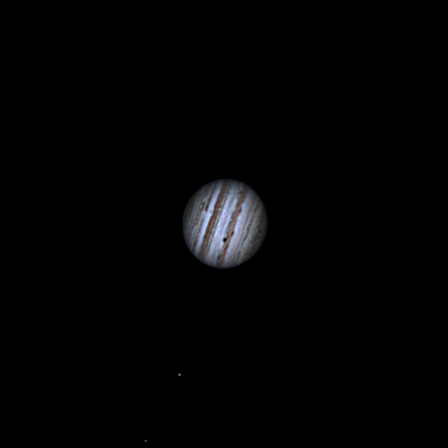
Jupiter with my 8" dob.
3 Likes
Is that black spot on Jupiter the Great Red Spot?
I think it’s the shadow of one of its moons.
I know next to nothing about astrophotography. You will need to help me out here.
Do you have any shots of galaxies merging together? Please post them on this thread when you find the time. I personally find galaxies merging together to be incredibly fascinating!
Thank you. Siril looks really cool. I don’t understand how you got 300mm focal length with an 85mm FF lens on an m43 sensor? The crop factor is 2x.
Also, nice shot of Jupiter! Does it actually look like that with the mentioned telescope, can we see this with our own eyes, or is this what the camera sees but is not visible to the naked eye?
I’m more or less just starting out, plan to do more when I get some time. Shooting DSOs with longer focal lengths (without a star tracker) is physically and mentally exhausting(+ fighting off mosquitoes  ). Have some gear on the way, hopefully that’d make the process easy.
I meant this picture is taken is on a 85mm full frame lens
Yeah, jupiter is one of the best objects to start out, you can see the bands clearly. Only issue is you need a high magnification eye piece (I use 9mm) and they usually have very small eye relief - you have to keep your eyes very close to the eye piece.
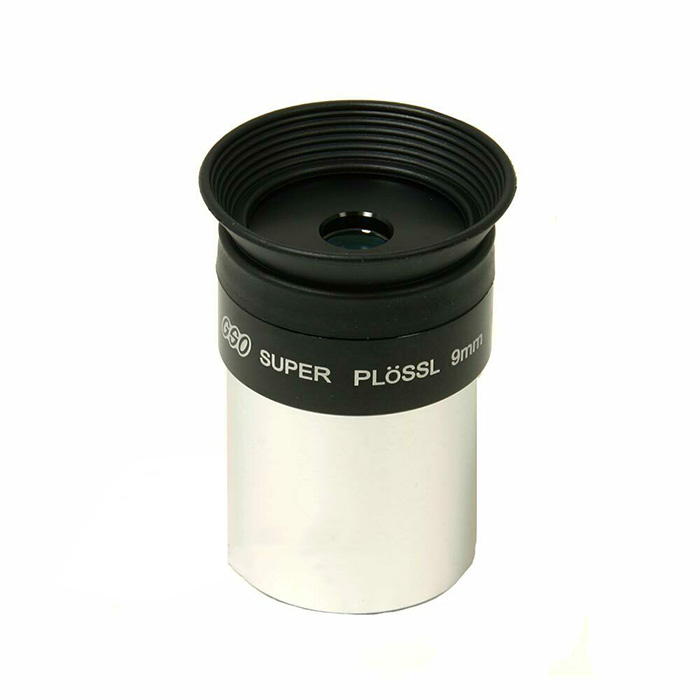
This is the one I use, you can see how small it is.
2 Likes
@jinx i was talking about this picture you posted
Both are same targets (M42 Orion nebula) the wide one is shot with 85mm full frame and close up is shot with 300mm M43.
1 Like
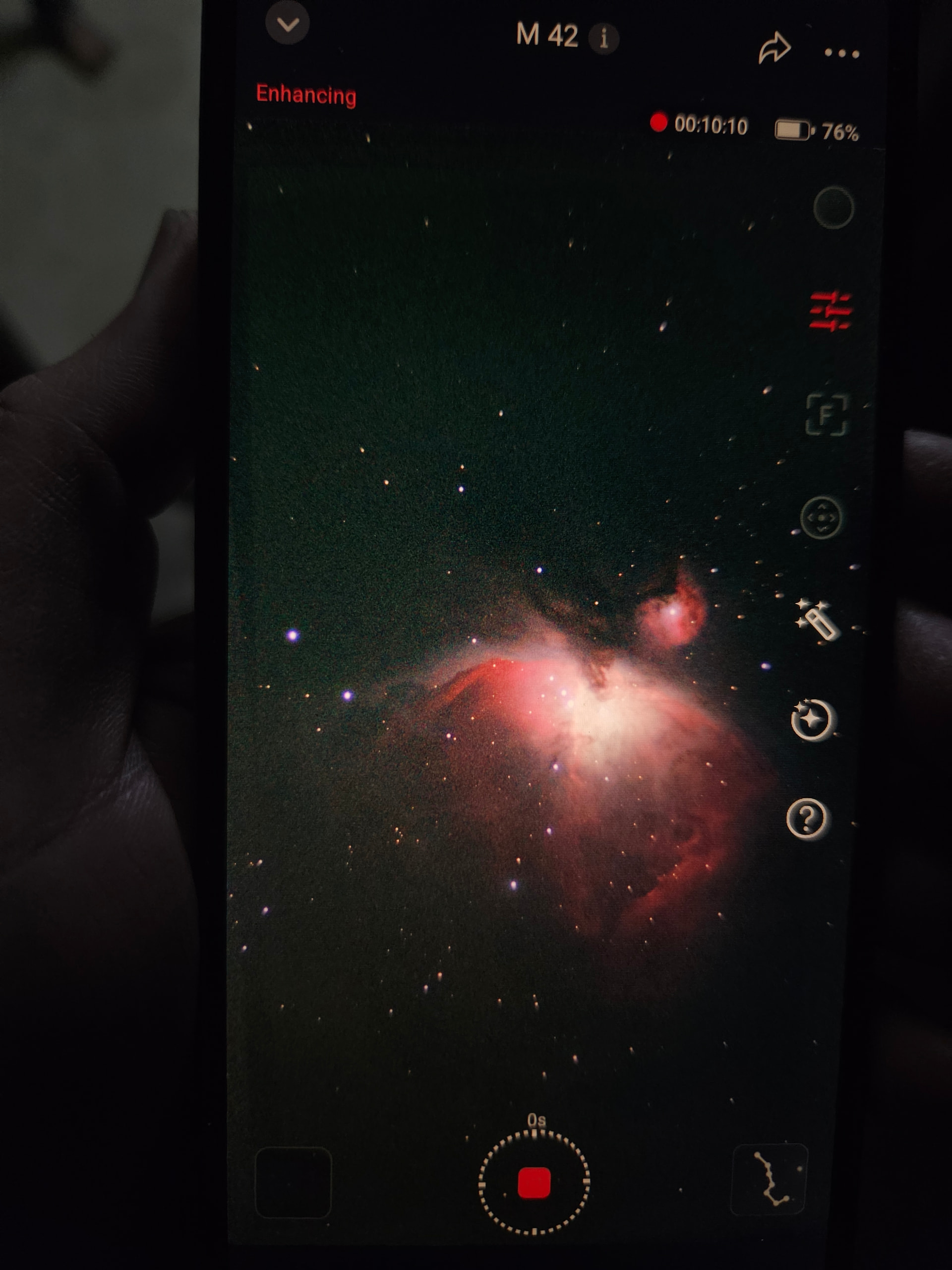
On the topic of astro photography, I’d also like to showcase my photo of the M42/Orion Nebula with my friend’s ZWO Seestar S50. Though unlike manually imaging (taking dark, bias, flat frames, taking light frames while continuosly tracking the object, stacking them in deep sky stacker/siril), the seestar automates pretty much everything. You provide it with a reasonably open slice of the night sky, tell it to go image something, and it’ll take care of everything. It’ll find the deep sky object, calibrate its real position and azimuth, do an auto focus, and start stacking automatically. There are some manual tuning you can perform, like sub-exposure time, exposure, focus, light pollution filter etc, but the process is largely automatic. This is both a good thing (setup is easier, you actually spend most of the time imaging and not doing setup) and a bad thing (you become detached from the process), but I digress.
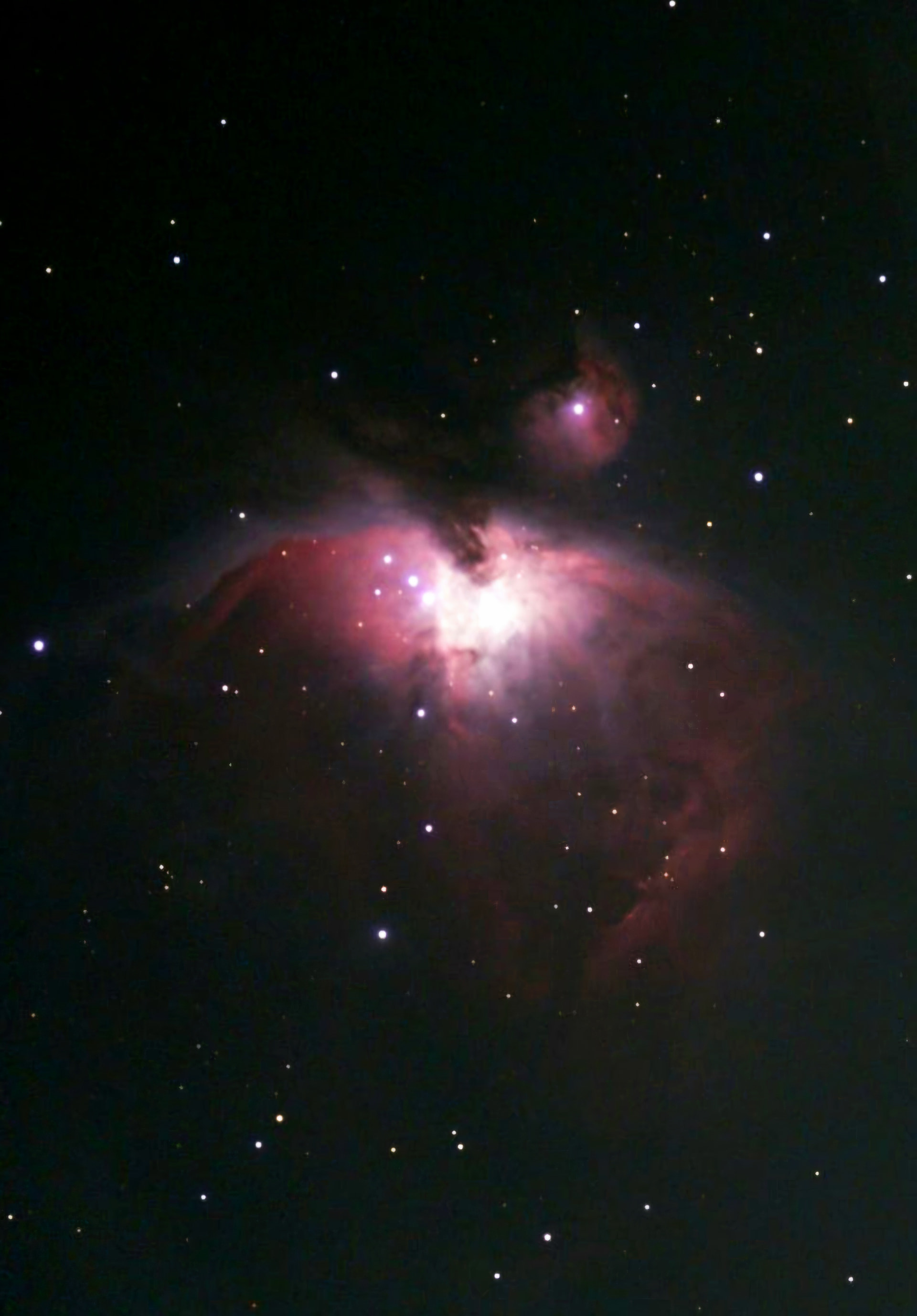
This is taken from Bangalore, on 29th Jan, so pretty close to full moon. Light pollution filter was disabled, sub exposure time was set to 10 secs, and total stacked exposure was 31 mins. Light post processing is done to make the sky darker. The seestar has only 2mp of real resolution, but you can use dithering to get a higher res image at the cost of exposure time.
Edit: Few of us friends are travelling to the Andaman islands to photograph the night sky, we’ll be there from 14th to 21st, date ranges chosen because 17th is a new moon, and andaman, especially the havelock and neil islands are one of the lowest bortle class regions (1-2).
5 Likes

God’s own country.
This pic might look like a game screenshot but its real with no artificial effects.
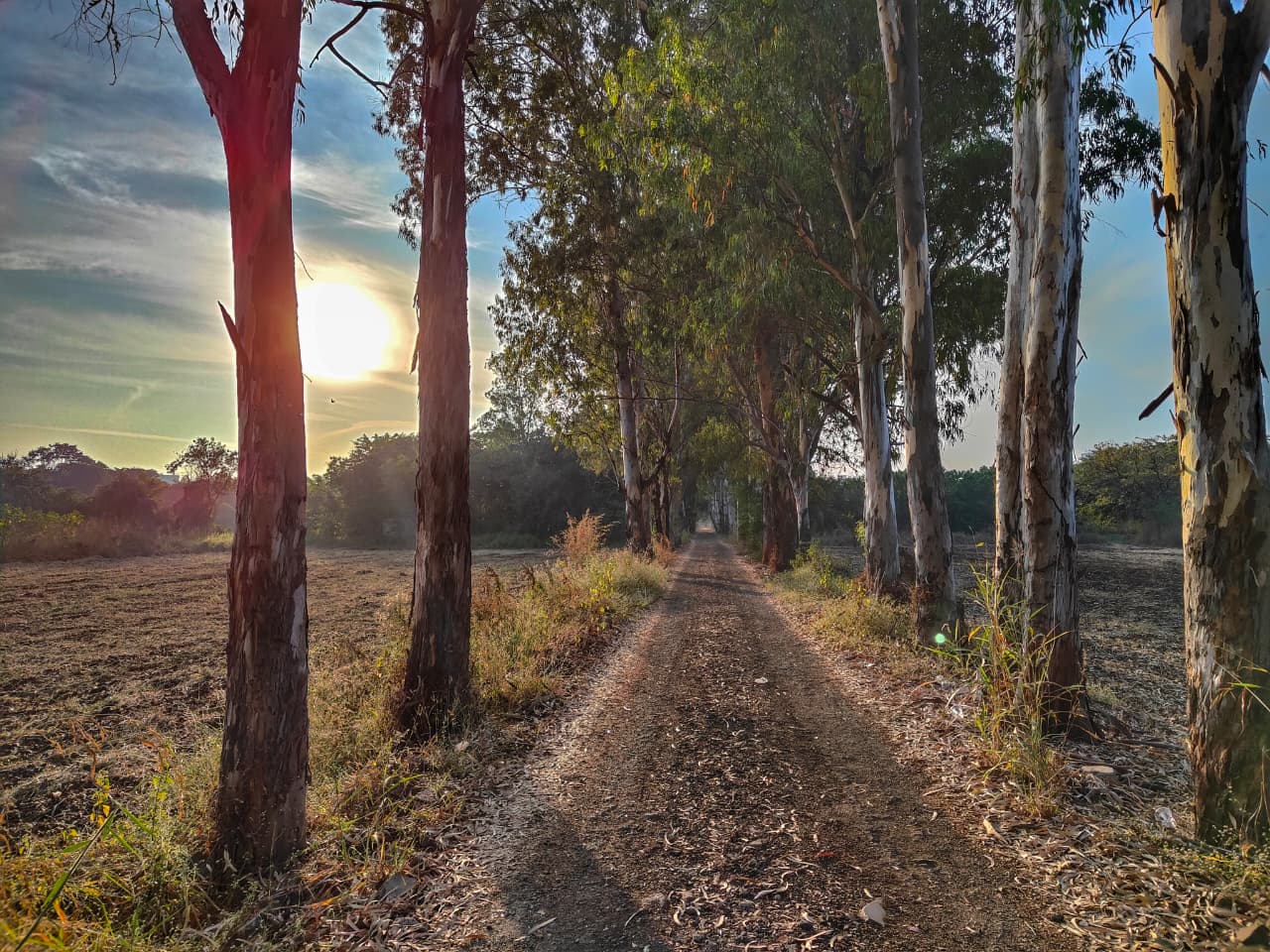
& so is this.
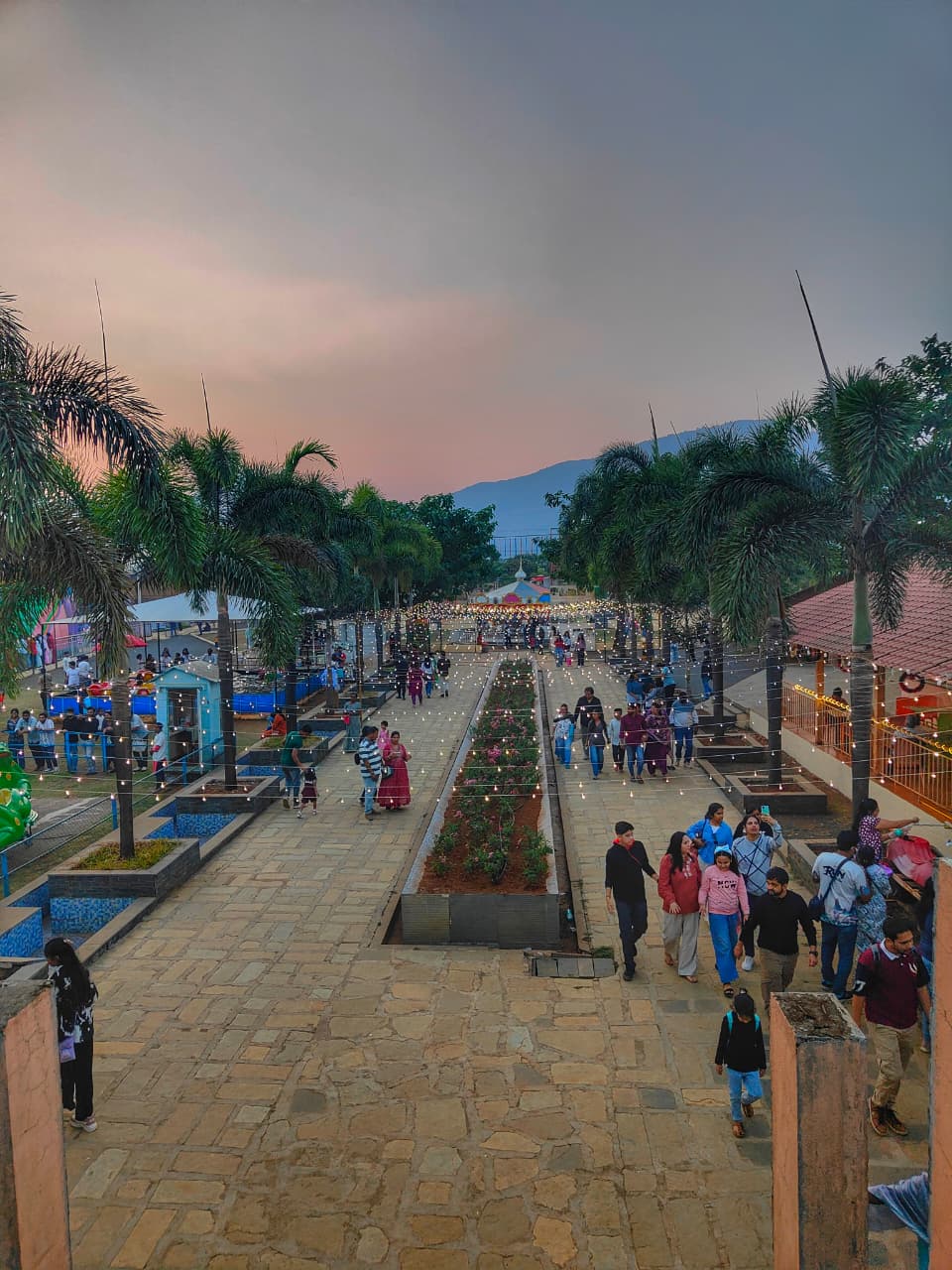
In both the cases, the overall atmosphere justified my photography.
Captured on- Oppo Reno 10 Pro
5 Likes