List any courses/videos or books that has helped you become a better version of you.
School! Seriously. We had 7 hours with 6 different subjects and fixed timings for each one of them, for over a decade and I don’t think any adult has accomplished more work in a day than a child does in school.
So I’m applying the same discipline to my daily work and it’s made a huge difference in my productivity the last couple of months.
People usually say focus on one task at a time and don’t spread yourself thin but that’s literally the opposite of any school anyone has ever attended.
I break up my projects/tasks/chores and spend half an hour on them every day, not much more. It keeps me fresh, I don’t feel fatigued or desperate, and I enjoy my work so much more.
Sometimes I talk to myself as if I’m both the teacher and the student in the class as well, but let’s not question that.
The only time I extend myself is when the work is crucial to either my day’s earnings, or my life’s comfort.
I spend about half the time working and the other half consuming (reading/watching/learning).
12 Likes
Thanks for this. Got me thinking.
1 Like
Interesting take. I would give this a try in my exam prep. I think it will be fruitful as the number of subjects are quite high to cover.
1 Like
basically curriculum. definitely works wonders
1 Like
Atomic Habits and GTD
https://www.reddit.com/r/productivity/comments/114i3gb/advice_a_very_selective_list_of_the_absolute_best/
Check this for more indepth insights.
1 Like
Improving our life requires few important things. Self control,discipline,ability to ask right questions,A strong why. i usually recommended being open minded on what you want to learn. dont cut any subject out of your interest without probing into them.Try to be a generalist. Try to ask people advice who you think are living better life than you.Read online articles they are very good compared to self help.medium is one but its paid but some articles are free and 1 month free trial. Try constantly learning from others ,note them down and try to implement things.
Try to fix some obvious things you know could significantly improve your happiness
3 Likes
2 Likes
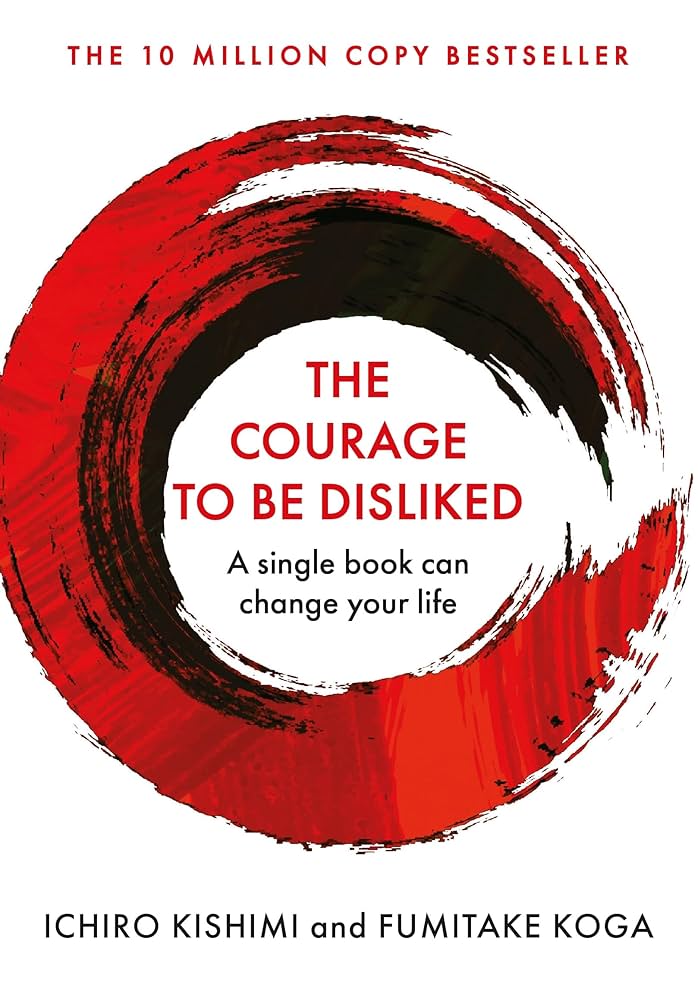
Easily this. Got my anger issues under control. Also gave me the foundation to start taking responsibility for myself.
1 Like
So many… on top of my head, in no particular order
- The ONE thing
- Atomic Habits
- Fooled By Randomness
- Antifragile
- Skin In The Game
- The Holy Geeta By Chinmayananda
- The Checklist Manifesto
- The Sovereign Individual
- How to Fail At Almost Everything And Still Win Big
- The Obstacle Is The Way
- Stillness Is The Key
- Why We Sleep
- Building A Second Brain
- Basic Economics By Thomas Sowell
- Influence The Psychology Of Persuasion
- Deep Work
- Wanting - The Power Of Mimetic Desire In Everyday Life
- Breaking The Habit Of Being Yourself
- The Reality Revolution By Brian Scott
- …
2 Likes
No self help book has made any lasting changes in me. In my experience, self help books are really just another way of escapism / procrastination- or maybe that’s just me. The core ideas could be strong, but they’re stretched so thin across the span of a book, that they lose its meaning and effect. I feel like strong short passages or even quotes do more than entire books.
That said, Tuesdays with Morrie was impactful one. Not a self help book though.
2 Likes
I quit reading post college days. Digital life killed the bookworm inside me!
Nope I’m not into e-books & definitely not a pdf white pages fan either.
1 Like
This is what worked for me. How to Do Things: Productivity for the Productivity-Challenged I had tried everything but this is a very well put together guide about pomodoro and visualization.
And this comment from reddit.
A big piece is understanding how ADHD actually impacts cognition, emotion, and subsequent behavior. Read a bit about executive function, working memory, and reward proximity. Russell Barkley is a good resource, and there are a few lectures on youtube that give a decent overview. Then perhaps read a bit about Gross’s process model of emotion and think about how the concepts relate to each other.
This is the first step, because there’s a lot of nuance and complexity that is often lost in discussions of ADHD by focusing on impulsivity and attention (emotion and executive function get left out frequently). Learning to recognize in the moment when you’re off task, or your attention is wandering is important. This is essentially a mindfulness task. If you can notice and label, you can pause and intervene. More importantly, you want to get to a place where you can predict when you will struggle and why so you can prepare for it.
For instance, when I was writing my dissertation, I knew there were a number of predictable barriers to task initiation and maintenance. I had created a pretty ingrained habit of immediately firing up my browser when I opened my laptop to do a variety of things that felt less overwhelming and aversive etc. (this is the emotion piece!). Interventions/strategies I used - when I sat down to write, I didn’t open my computer first thing. Instead, I reviewed a physical task list I had made and tried to visualize the details etc of my work session briefly. I then spent a couple of minutes thinking about my immediate goals and why they were important to me, how they connected to my life/values etc., reframing my assumption about whether work is boring/bad/hard, and a bit of thinking about why internet browsing is not so great. Then I spent a minute or two visualizing my automatic/habitualized traps I tend to fall into when working and remind myself that they’re temporary urges that I don’t actually need to indulge, and every time I resist them I’m making myself stronger.
There’s overlap here with what others are saying about meditation, but I would be more specific and suggest that mindfulness training is going to be more effective for you here. Acceptance and Commitment Therapy and relational frame theory is a good thing to familiarize yourself with. I worked a bit with an organizational coach who kept me accountable and helped me think through process and problem solve as I implemented a lot of different strategies.
I still take a small dose of stimulants now and then, but behavioral strategies have been much more effective for me and much more confidence building. I’ve also had some difficulty with mood, particularly with adderall. For me and many others mood can ebb and flow a bit, especially with the fast acting amphetamines. Feel pretty good when it’s active in my system, and pretty grumpy and sluggish when it’s not if I’m taking it consistently, suggesting a bit of dependence. I dislike that, so I try to minimize my intake and stick to lower doses. Hope that helps
In principle, the idea is to begin to find external mechanisms that can augment/strengthen/compensate for specific weaknesses you may have.

3 Likes
Thanks for posting this.
Agree with this. There’s a lot of fluff out there and the ‘New York Times Bestseller’ tag is a big culprit in promoting it.
Personally, what has helped me is a few principles from a lot of different sources.
Naval’s tweet thread ‘How to Get Rich Without Getting Lucky’ is great. It’s a bit of a disjointed information dump though, so might be worth looking at the Almanack of Naval Ravikant (which doesn’t feel like a book, but as if the thread was given more context and flow). Obviously it’s been milked a lot since with podcasts and blogs on it. So pick your medium of choice 
Atomic Habits also has some good ideas but really you can pick those up from summaries without reading the entire book.
Personally, I’ve also found a lot of comfort and motivation in the principles of ‘Memento Mori’ and ‘Mono No Aware’ (very similar but different). Good for internal balance, but discussing them with folks who only read bestseller list stuff will get you branded a pretentious know it all. 
1 Like
Thanks for the reminder on the work done in our school days. I too have a planner that I have created on A4 Sheets and I use it manually. It keeps me sane so that I don’t forget to write. Probably the one time I write in a day.
Any app recommendation to have the planner on Android, prefer storage on device and no cloud based setup for reasons of spotty connections and privacy. Earlier I used inbuilt calender but that was too cumbersome for me.
1 Like
Exactly why i avoid self help etc. I had linchpin and some other books which did this it tired me with this exact thing while reading the first 50 pages.
I have read some self help books like atomic habits, but I don’t think any of them have made any meaningful change in my life overall. Change comes in response to a desire or some other external stimuli and overall i consider it to be a hell lot more natural unless you really want to change or improve no amount of self help books will help you.
1 Like