Efficiency Testing a Luminous Cruze 3.5kVA Inverter with a LiFePO4 Battery

Quick Recap:

I bought this Inverter back in May of 2021: WTB Sinewave UPS Inverter, so need suggestions. - #12 by rsaeon

And purchased a MuscleGrid Server Rack battery for it in Jan of 2024: Teardown & Rebuild of a MuscleGrid LiFePO4 Server Rack Battery (that was an entire saga of learning and discovery in and of itself!)

That I finally put into use In November of 2025: Teardown & Rebuild of a MuscleGrid LiFePO4 Server Rack Battery - #72 by rsaeon


And Now:

It then occurred to me that I really needed to know just how efficient this entire setup is.

It’s wired up like this: Stabilizer → Inverter → Homelab

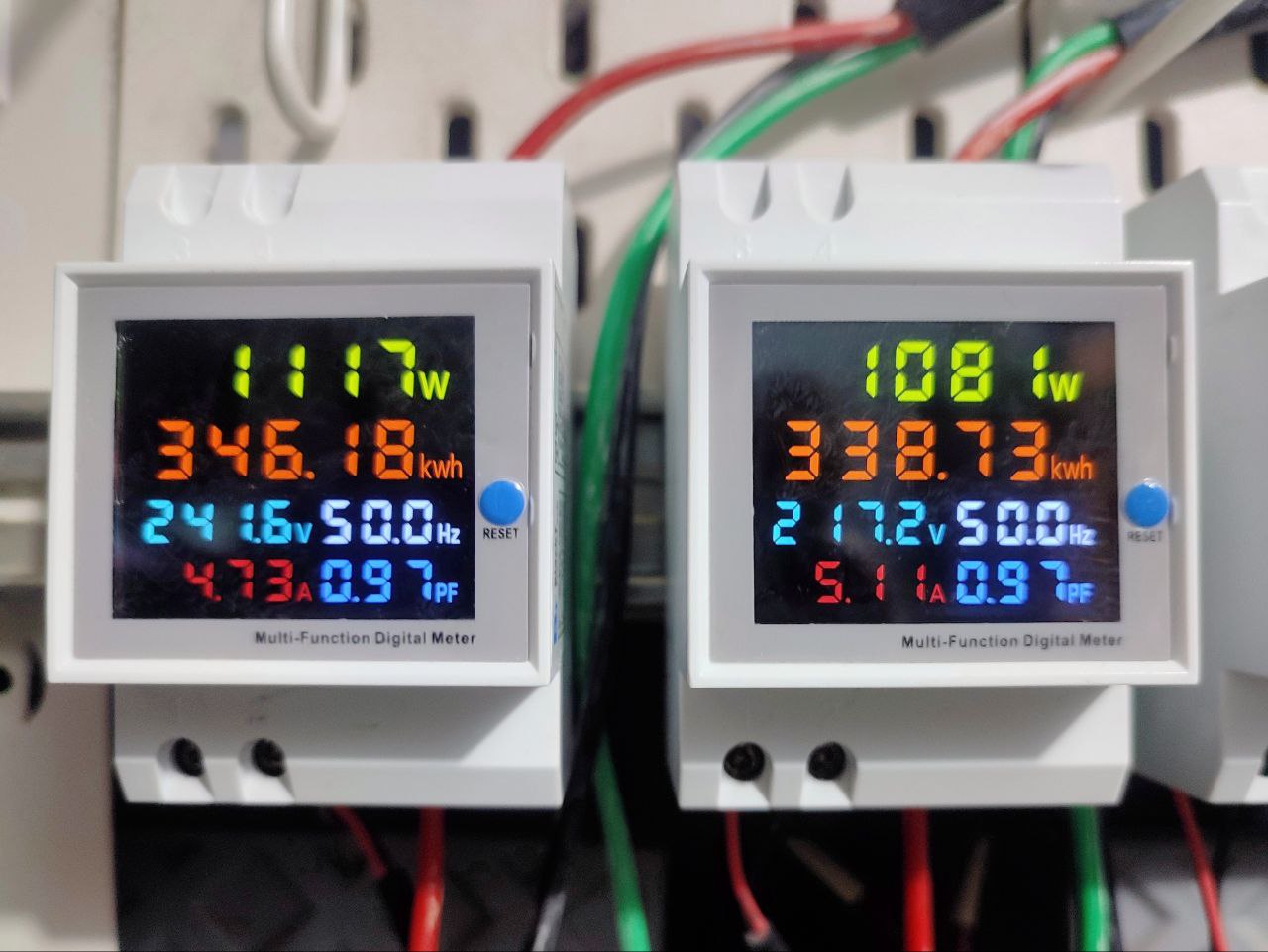
So I got a few AC power meters and placed them before each component and started my testing.


The first test was to measure the actual inverting/output/discharge efficiency of the inverter.

How much energy that is pulled from the battery makes its way to the homelab (load)?

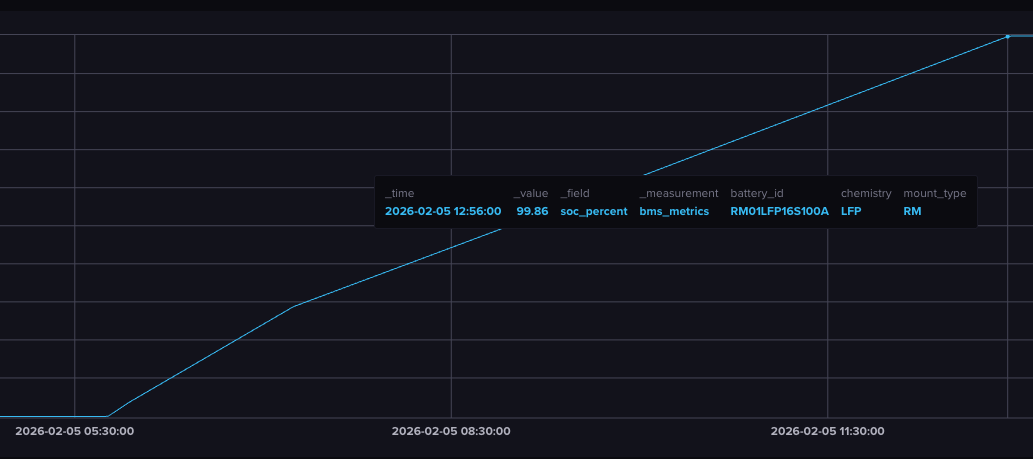
For that I did a controlled discharge down to 48V with mains power turned off.

Whenever this happens, the code I wrote resets the State of Health to the Depth of Discharge value:

Screenshot 2026-02-05 at 6.03.09 AM

So that’s 4.65kWh that was pulled out of the pack. That’s actually a pretty decent number for what the MuscleGrid battery costed at the time (<70k, when DIY with new cells would’ve been >90k) because it was built with used cells.

So how much was actually output by the inverter?
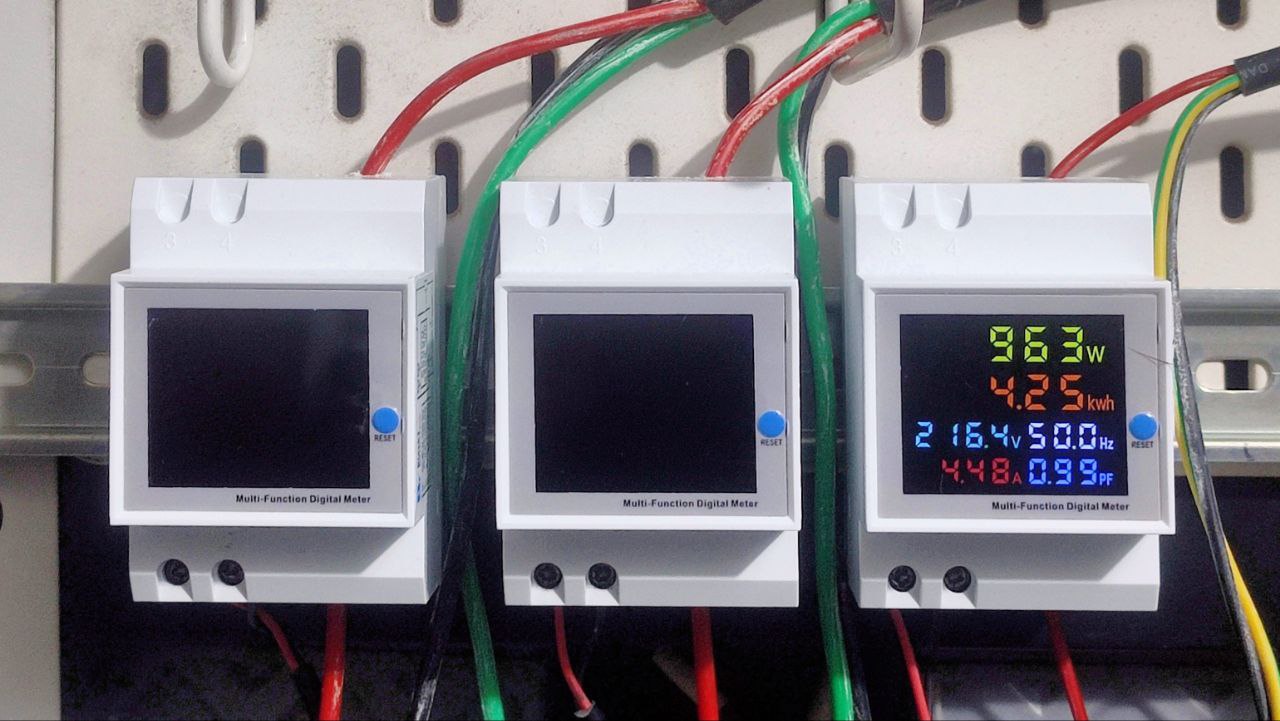
4.25kWh! That’s 4.25 ÷ 4.65 = 91% efficient!

Not bad for a low frequency inverter based on ancient technology, haha. Though, it’s most probably because it’s a 48V inverter, lower voltage inverters have too many losses in wiring that brings down their efficiency.

Next update will be about charging efficiency and stabilizer efficiency, after 12 or 24 hours.
7 Likes

Alright, time to crunch some numbers:


Let’s get the stabilizer numbers out of the way, it’s a V-Guard VGMW 500 Plus Mainline Stabilizer, rated for 15A.

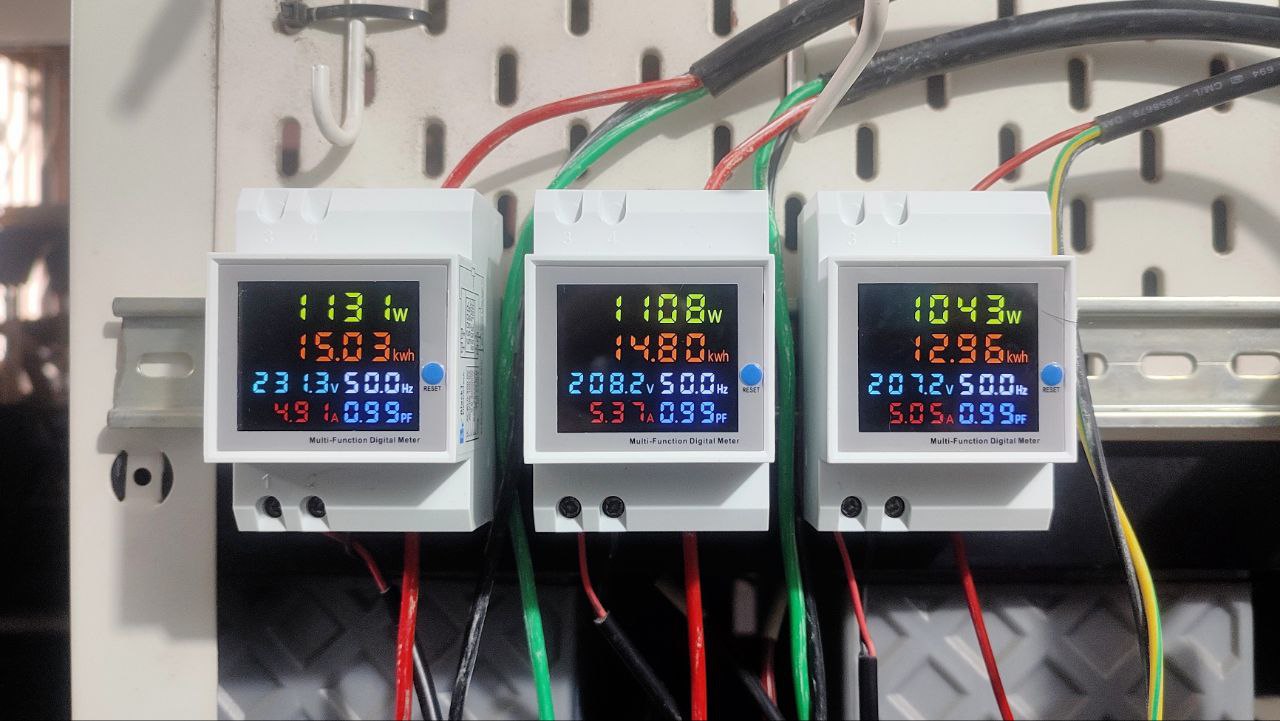
Efficiency for the last ~8 hours has been 14.80 ÷ 15.03 = >98%. Pretty happy with that.

I wish i knew why it was bringing down a perfectly fine 230V to 210V.

I’ll revisit this calculation after a week or a month.


And now the actual charge efficiency numbers!

So that’s been 14.80 kWh into the inverter - 12.96kWh out of the inverter + 4.25 kWH offset from before

Which is 6.09kWh, that’s total energy taken up by the inverter to run and to charge the battery.

We need to take out the inverter’s running load for the last 8 hours, that’s 1108W - 1043W × 8 = 520Wh.

Actual charge/discharge (round trip) efficiency would then be 4.65 ÷ (6.09-0.52) = 83%.

We’re putting in 5.57kWh to get 4.65kWh out of the battery.

I think… that’s not completely horrible.


But now let’s add the inverter’s consumption/losses and see what we get for total system roundtrip efficiency.

That’s actual power out from the inverter ÷ actual power used in charging the battery.

For that we’ll need to figure out how long it took for the battery to reach 100% SOC.


Let’s say that’s 7 hours, so the inverter consumed 7h × 65W = 455Wh

And now the calculation is 4.25 ÷ (5.57+0.45) = 70%

That’s definitely less impressive but it’s good to know.

How much energy does the inverter use every day, if we have no power outages?

65W x 24h = 1560Wh or 1.5 units or Rs 15 per day or Rs 450 per month.

That, i think, is perfectly reasonable.


And at 70% efficiency, for every 1kWh I use from the battery, I consume 1 ÷ 70% = 1.42kWh from the electricity board, or 42% per more, which is probably inline with most other inverters.

In other words, if my load is 1kW, which it currently is, then every hour of a power outage is costing Rs 4.2 extra over my regular bill.


Time to bring our favourite chatbot in to the conversation and ask for a TLDR:

  • Battery + conversion efficiency (excluding idle): ~83%
  • True system round-trip efficiency (including idle): ~70%
  • Standby energy cost: ~1.5 units/day (~₹450/month)

Fair price to pay for uninterruptible power, woo.


Okay, but what if i say this entire testing is flawed?

As in the numbers are worse than they actually are?

It’s because I completely forgot I have a parallel 7Ah lead acid battery bank attached:

Theoretically, this means there’s a potential for the numbers to be better, but that’s for another day when the battery is permanently set up.

Please let me know if you see any glaring/non-glaring issues.

Hopefully my 10th-grade maths worked out okay here.

4 Likes

Here we go:

That’s >97.8%. Still happy, woo.

2 Likes