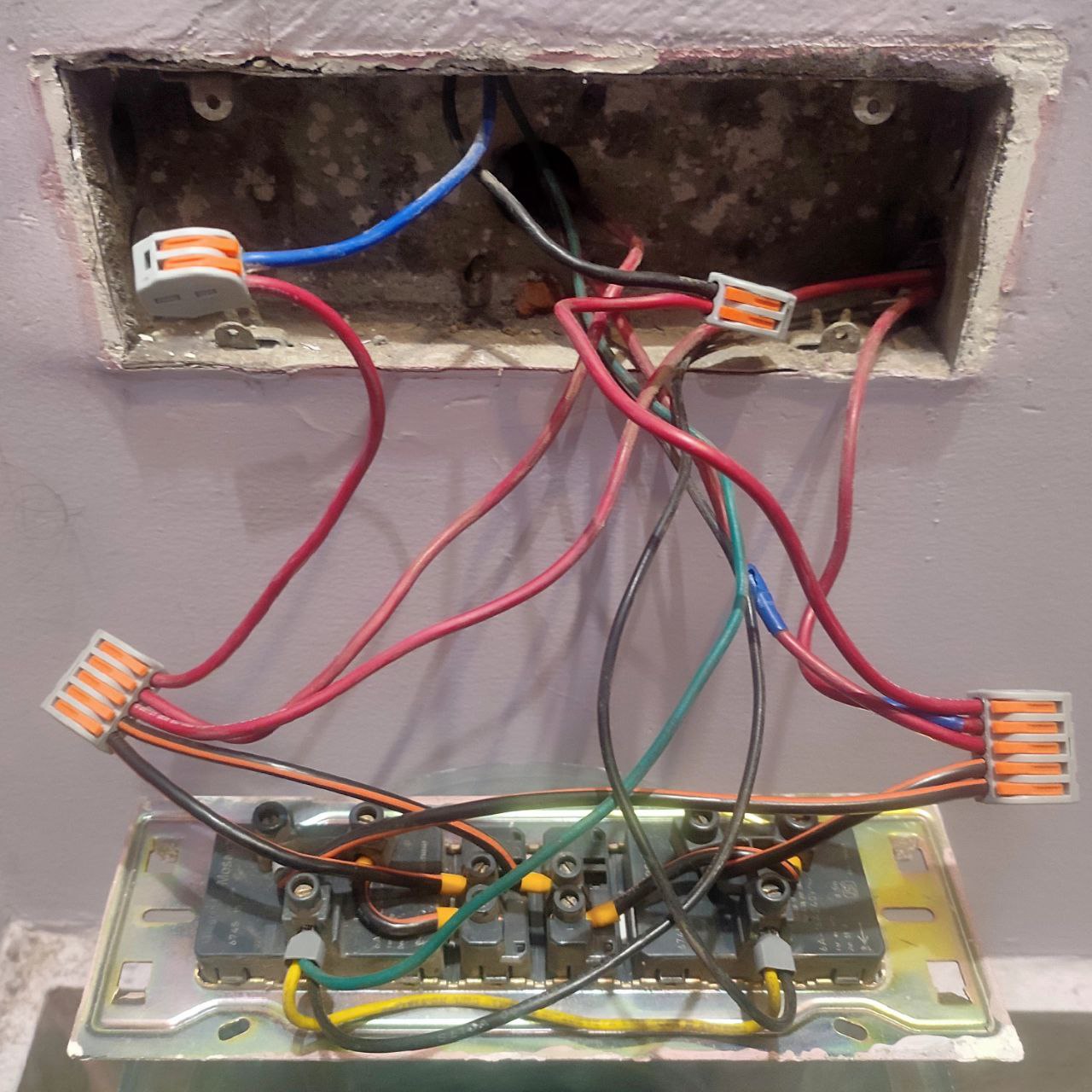
Oooof, we have a guy with thermal camera among us.
Which model is this? How much it costs?
Oooof, we have a guy with thermal camera among us.
Which model is this? How much it costs?
That thread was a huge help for setting up my lifepo4 system, which is still ongoing ha.
Its a Uni-t and about $290 with US state taxes.
Whenever you request a datasheet for a wire, the current rating listed is typically specified at an ambient temperature of 25 °C. As the ambient temperature rises, the wire’s current-carrying capacity decreases. Under full load, the wire also heats up further due to increased resistance.
A common rule of thumb is to choose a wire with a rated current capacity at 25 °C to be at least twice the expected operating current.
This way at full load your wire will not get hot, you can check by holding the insulated wire in hand when it’s under max load. We have to take risks like this cause we don’t have thermal camera. 
The above 2 are confusing . Either the plug or the switch contact is not proper to heat up . Most times the switch contacts inside the switch are the cause .
I don’t have good experience with these. Maybe because we get crap flimsy quality in India. We used this on our own mains cable which is aluminum. It’d burn in a few months. Finally I had enough, and I soldered the damn live wire using my computer UPS. That lasted for 15 years.
That’s so cool. I have been using my skin cells to check for fever on wires to see if they are taking the load or not. LOL.
When the bottleneck is caused by the wire, the entire length of the wire will heat uniformly from one end to the other.
When it’s the part near the plug getting hot: it’s the contact issue.
Yes. 99% of times that’s the issue.
We have the worst standards for sockets and plugs. I talked about this with blr_p in some thread. More like we don’t have standards. It’s always these contact points will cause the issue.
Was thinking of getting a welding machine for personal hobby reasons. How stupid of an idea is that?
I’ll probably use it once in a year at max.
It was new switch and I made the extension box, I did see the switch was at 80C to 85C and the wire was at 100C. This extension box had another identical Switch and socket next to it but this one was with a 6SQ MM and it was cool. But like I said this was a full hour or more of 13A continuous load. Even the orientation of extension box had a impact on the temperature build up, since the extension box had a hole at bottom side, when I made it to face up, the temperature dropped as the warm air inside could escape faster vs being trapped inside. So now I just removed the conked of switch and left it open witbout covering it with a dummy plate, so that it can have natural ventilation.
Most of EV plug points get burned out due to long hours. Most have resorted to using 20A MCB connected rather that a 20A DP switch which have tiny terminals. As a MCB has much bigger terminal area and they also help dispate the heat.
The older stype DP switch made of ceramic would have been much better for these. They have a much bigger contact area within the switch and also the terminals are bigger and doesn’t have plastic to melt. They last decades.
Unless you are going to weld them yourself, its a waste. I bought so many welding sticks for different metal all gathering dust. Unfortunately for me my eyes are just too sensitive even with the darkest shade of glass. So gave up welding.
I will wait for the day 1kw to 2kw laser welders become cheap. They have much less spatter, smaller arc and thinner welds that don’t deform thin metals.
I am still drooling at laser 3 in 1 that can cut, weld and can take out rust. Will be several years before it becomes affordable.
Yup. That’s the idea. Though, I have never used this particular machine. So I have no idea how good my welding will be with no practice.
For me, it’s my vampire skin. I burn like a little girl in the sun.
I have a 250A welding machine . It cost around 5.5 k . It is fairly easy to learn welding and handy if you have a good deal of welding to be done . Else , rent 1 for around 150-200 a day to get the job done ,learn and then buy one .
EV plugs get burnt because of improper contact and arc which happens due to the improper contact . EV chargers use high capacity caps for smoothing the power supply . When the charger is switched on the capacitors need to get charged and the AMP draw can be high on switch on .
Which ever charger it is , mobile , laptop or any power supply which employs SMPS will spark if the contact is improper . When you plug in a mobile charger when the socket is switched on it will spark . Imagine a loose contact with 50 amps draw .
They are still available . Last 1 I bought was GM . They are used for single phase main switch . Electrical Surface Dp Switch With Indicator Switches For Home and Commercial | GM Modular
I have used two of these for EV charging. I haven’t used them yet, as I have no EV.
These go in the switch plate itself.
https://www.amazon.in/Anchor-Panasonic-Penta-Modular-Single/dp/B086HDNW73?th=1
I remember why l had the old style ceramic DP replaced with modular ones because every once in a while a tiny lizard gets inside in the gap and shorts them, lights used to flicker through out the house.
Also increasingly harder to get those plain faces plates at nearby stores. Also a pain to make holes no matter what tools or mask I have.
Also those non modular socket for this may not always be a tight fit for the 16A plug due to lack of proper standards in old style sockets.
Whats the going Labour rate for welder without the welding machine theses days.
Around 1200-1500 a day
How much load on these?
The 2.5 sq mm blue and black wires from the distribution box are wired to EIGHT (!) 16A sockets, it’s complete insanity — I’m going to put warning stickers on every socket, something like “2A/500W max.”
Long term is to change out the internal wiring with 6 sq mm wire, but that’s like a year or three away. I’m still bitterly disappointed with how the wiring was done, but I’ll get it fixed some day.
Near term plan is to trace out every socket in every room and see how many share the same wire back to the distribution box and label those too.
For now, the load on all 8 sockets will be less than 250W. A few chargers, a camphor burner, and a couple of fans.
I’ll also be running a direct 4 sq mm connection to the distribution box for my homelab and 3d printers, next week maybe.
Wow! This is such a popular thread and is so refreshing to see my brethren! 
I do small tasks myself… anything that involves risk like working on live wires or removing and refixing something large like a sink/commode, call a guy because it will be too time critical. Like most people here, even if I know what to do, I would’ve taken at least 5x more time to do it. I replaced the ethernet cable in the conduit from living room to the bedroom myself. For the last few years, have been buying DIY furniture and assembling it myself.
Always been collecting a lot of parts and tools from childhood. Have a while cupboard full now. Got the more expensive ones only recently like a hammer drill etc. Would’ve been such a delight if I had gotten it in my childhood. I used to be always interested in any kind of such technical labour around the house being done as a child.
By the way, I had a long term question:
I see wago(original) is also available in India, but does it make sense to do the complete house using them? How do they compare to what’s otherwise done in terms of price? Are these clones as good?
A few years down the line, if and when I buy a new house, I would definitely like the electrical wiring to use the best methods. So, asking in advance for my knowledge.
Hire the professional. The one which will give you the wiring diagram of your house before they do any work.
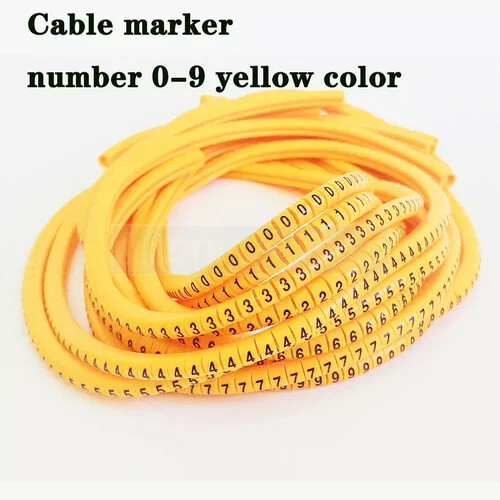
When the work is done right, in case of any problem or upgrades in the future, you don’t have to guess anything, which wire goes where and what not, because you have the diagram. All wires will have the marking ferrules on both ends. Guessing game is out.
All wires will be color coded, just by looking at the distribution panel you will able to know which wire goes to which room, troubleshooting becomes walk in the park.
If you see the electrician with electrical tape in his bag or toolkit, this is a red flag. There is no use for electrical tape in real electrical work anymore. Using tape is considered inferior workmanship.
A proper electrician will do all kind of testing after the work is done, especially for earthing to make sure earthing is working properly.
Run ethernet wire in every room separate from the electrical wire housing. With Poe you will be able to run your routers and stuff just from the ethernet wire alone. No adapters will be needed.
Route all your ethernet wires to one location where you will place your POE switch. Adding cameras in future will become so much easier if ethernet wire is nearby.