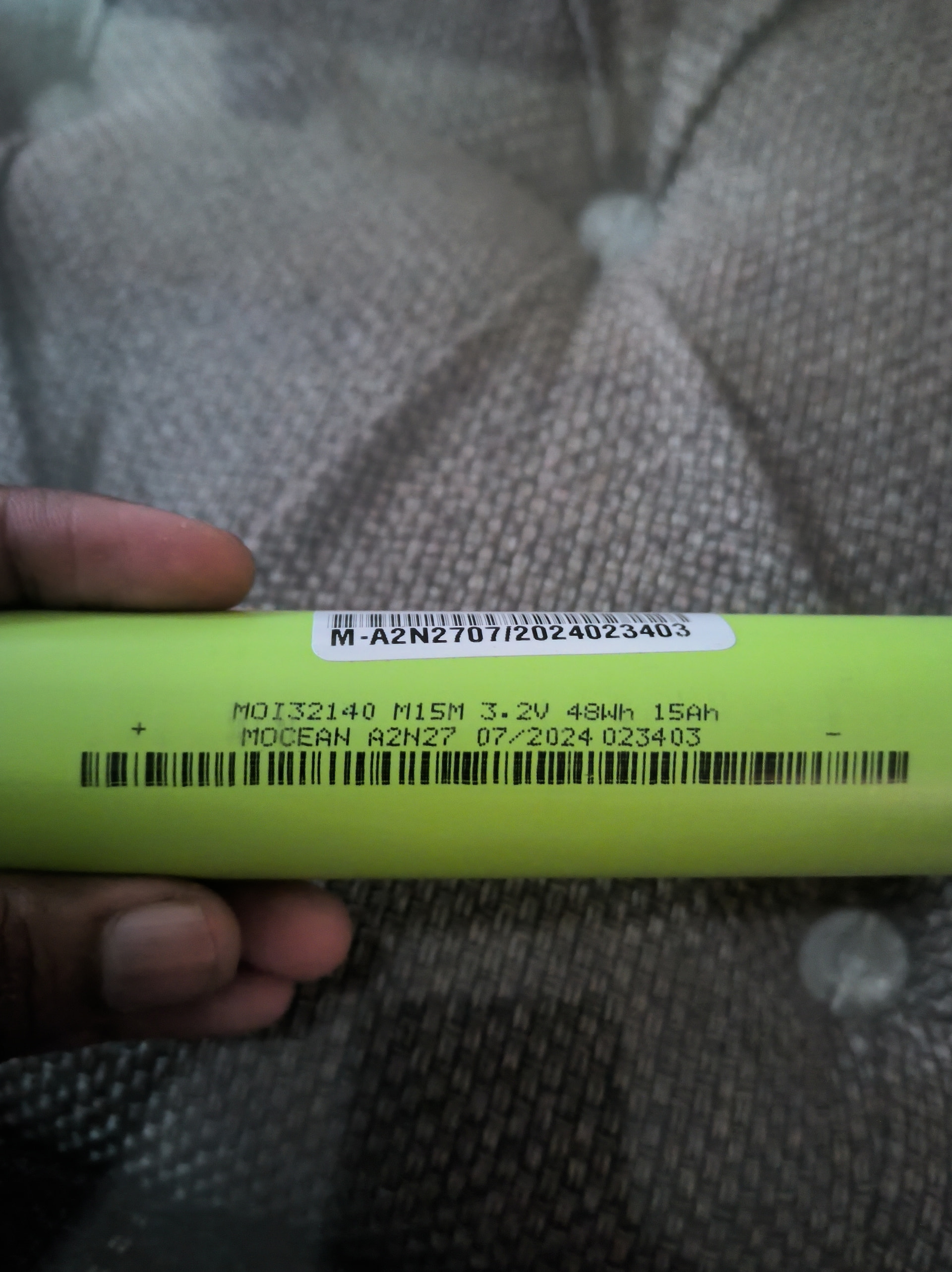
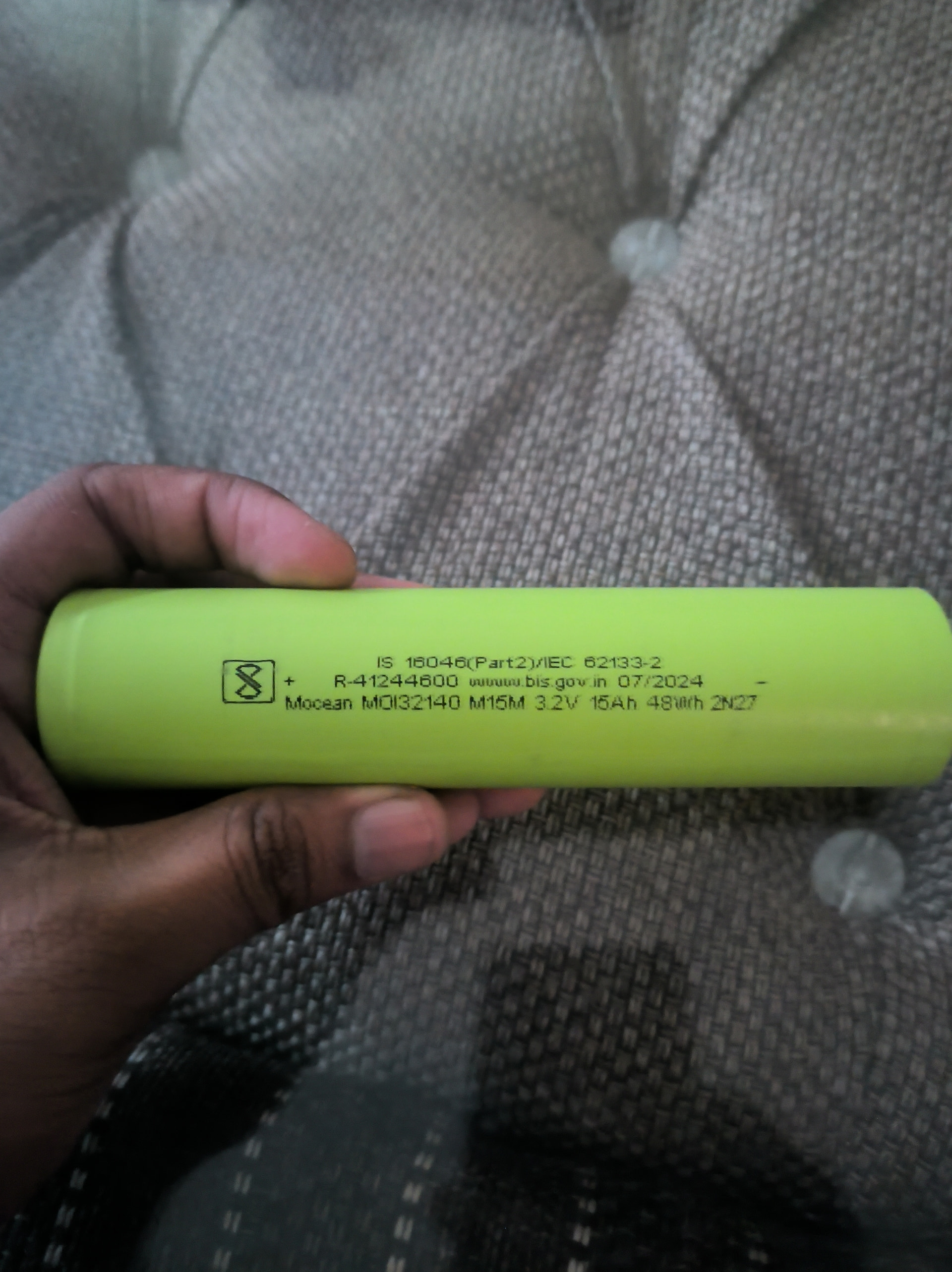
Making a custom LiFePO4 pack is rather trivial, but I am having a lot of trouble finding suitable inverter in India that would be compatible with lithium battery packs.
I currently have a microtek inverter (non pure sine, ~800VA I guess) + exide tall tubular 150AH battery that has aged quite a lot and needs replacement either way, I thought it would be a good opportunity to get pure sine and lifepo4 based setup instead because of several benefits.
I have some know how of custom battery packs and I am quite confident that I could make a 4s (or more) lifepo4 pack with prismatic cells and BMS but I really can’t find concrete information on inverters that would work with such battery, mostly there are two problems with using regular inverters:
typical inverters float charge when around full charge and that works for lead acid but is not at all ideal for lithium batteries.
and the inverter needs to have a configurable (or sane) low voltage cut off, i.e. before the BMS cuts off and messing up the whole system. A typical inverter assumes a dumb lead acid battery that would still have some charge left even if a few volts, enough to keep the logic part keep working but a BMS would have a hard cut off.
Any information, guidance etc would be really appreciated!
wouldn’t float charging at any voltage be an issue?
I don’t have any data to back up but my intuition says that:
BMS tries to dictate the safety behavior while charging
if an external charger is connected, at full charge, the BMS would just cut off the connection (at least momentarily)
would any regular inverter be able to cope with that?
Like at a very small scale I have noticed that a type c to 4s charger module would go haywire if connected after the BMS but worked fine if connected before the BMS in certain BMS boards, thus guessing something similar
The BMS only cuts off power in four or five situations, over voltage, under voltage, over current, over temperature and under temperature (at least for lifepo4 battery packs, these react slowly compared to lipo).
So long as the voltage outputted by the inverter is within 10V and 14.6V, the BMS doesn’t cut power.
And if power is cut, the inverter really doesn’t notice until it’s time to switch to battery power but the BMS would have auto recovered by then or almost immediately.
The details of what voltage is ideal for float/bulk/etc mainly has to do with prolonging battery life (one decade vs two decades).
First of all, hats off to you for doing so much research and providing the information thereof in that thread🙏🏼
I am very confused about which one to get, if what you say is true then I suddenly have a lot of options than I did before, even the ones you listed, almost all of them seem to have float voltage within the threshold for my purposes.
If I were to ask for your educated opinion, what would you recommended here?
Would it be okay to go with UTL or Genus inverter? they cost ~9-12k and are a bit more expensive than the regular branded ones but they seem to have a bit more flexibility ?
Both Genus and UTL are good choices but I’d confirm the voltage ranges again by requesting pdf manuals of the model from each company’s WhatsApp support.
The voltages are set using presets resistors on the board . It takes a simple voltmeter and a star screwdriver to adjust the voltage levels on the boards . Just be careful to wear gloves and not get electrocuted .
One thing I’ve observed in lifepo4 youtube is that everything is just assembled, there’s no original design anywhere. This type of cell, that type of bus bar, this bms, that sensor, this casing, that terminal. It’s all put together like children’s blocks.
That suggests to me that lifepo4 battery packs are a well matured technology, a nearly idiot proof product that requires just basic safety checks.
Basically what my assessment was when I took apart the muscle grid battery:
To be fair, even that musclegrid battery would’ve easily lasted a decade or more in the condition it was shipped. It would take months/years for it give you full capacity, but it would’ve worked just fine, way better than any lead acid battery.
So it doesn’t really matter what branded/unbranded battery you get, it’ll become obsolete before becoming unusable (like DDR3 systems today, you can still use them, but no one’s going to intentionally want to buy/build a brand new one).
This mirrors what I’ve seen on Amazon as well. There’s a lot of unknown brands selling inverters with built-in lithium cells and they have really high customer ratings. Like 100+ reviews that are 4.5 stars, you can’t buy that kind of feedback.
Torque Energy does have the reputation of the company it was before it was rebranded, so you do get a better support/service network, that’s something that the unknown brands on Amazon wouldn’t have.
torque is a new brand name under nandhini batteries a lead acid battery manufacturer. similar to most the lfp battery pack manufacturers they get cells and bms from China and assembling it in here.
Yeah more or less that only.
Just a backup for “more important” low-power-ish appliances like fans, light, computers, etc you would find in a state like Jharkhand (and this would be how I slowly doxxed myself over time), I don’t know how common is an inverter UPS setup in the tier-1 cities, my cousin who lives in south currently, never needed to install an inverter even though he already had one, they bought while living in UP.
Currently I have a 150AH lead acid battery and ~800VA Microtek inverter (non sine), the battery has become shit as it is quite old and we had to replace it anyway. Me being a diy-opportunist, I managed to convince my parents that this lesser known tech is very much worth it and would cost around as much in the end if not lower but would offer much more.
I have been kinda busy IRL so I wasn’t much active over here but I will share the whole diy project details with all the information and things I learned for others who might gain something from this.
I have a lot to share and I am just half way there in the process of putting stuff together but I have ordered most of the stuff for the battery part and only need to order/buy the actual inverter, currently eyeing on UTL gamma plus 3350 or 3400 but will see… Even 1.5k VA model would work fine for me but it costs ~13k whereas 3350 seems to come at ~18k, an extra 5k for double the specs.
Sorry if this post has been all over the place and janky.
Seems the Inverters are now DSP based . While inverters are DSP based and offer LIPO batteries I am wondering why UPS majors like APC , Eaton still have no offerings .
I heard the news some time ago and visited their website as well and they were promoting their LFP based packs and mentioned something like their lithium inverter series but I searched a lot but couldn’t find anything close to lithium supported inverters by microtek.
Idk… Maybe it’s coming soon™ or something
Thanks for this info, I looked into it, It seems that you are right!
Unfortunately it means that I am even more confused now because of more options .
I am very perplexed about which one to get, utl gamma feels like some shiny fancy feature packed thing but the new Microtek ones seem like enough, time tested and conservatively modern.
Though there is still a gap (would happy to know otherwise) that 3kva or above suitable 24v models are only available by utl under 20k.
(Unfortunately?) I already decided and proceeded with 24v and changing that would be kinda difficult now…
Each are 32140 size 15AH lifepo4…
I buyed it from a seller on Indiamart and it costed 240 INR per cell (9600 INR for 40 cells) + ~700 INR delivery (55INR per kg, ~13kg weight total).
Though the seller showed me different company cells in the image and the ones that have arrived are different but I am hoping it won’t matter much . I noticed the different brand name after reviewing and thanking the agent, so it’s awkward for me to complain now so I am trying to concretely know if something is wrong.
For sanity, I have full charged one of the cells and would do a capacity test over night (will post the results later).

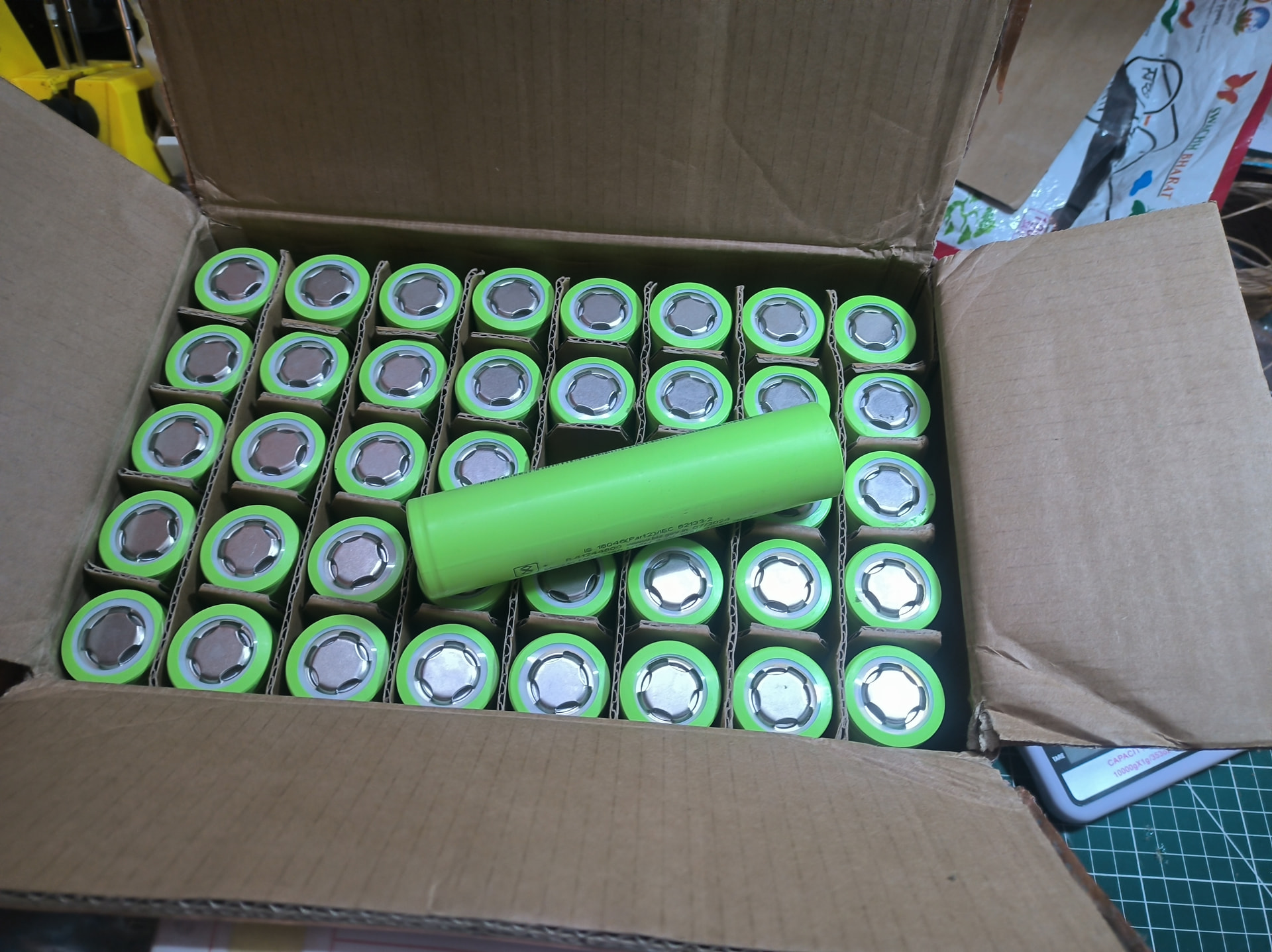
 . I noticed the different brand name after reviewing and thanking the agent, so it’s awkward for me to complain now so I am trying to concretely know if something is wrong.