Looks like AMD is rebranding CPUs again with Ryzen 10 and Ryzen 100 series
AMD is quietly recycling older processors, giving them new names without changing specs.
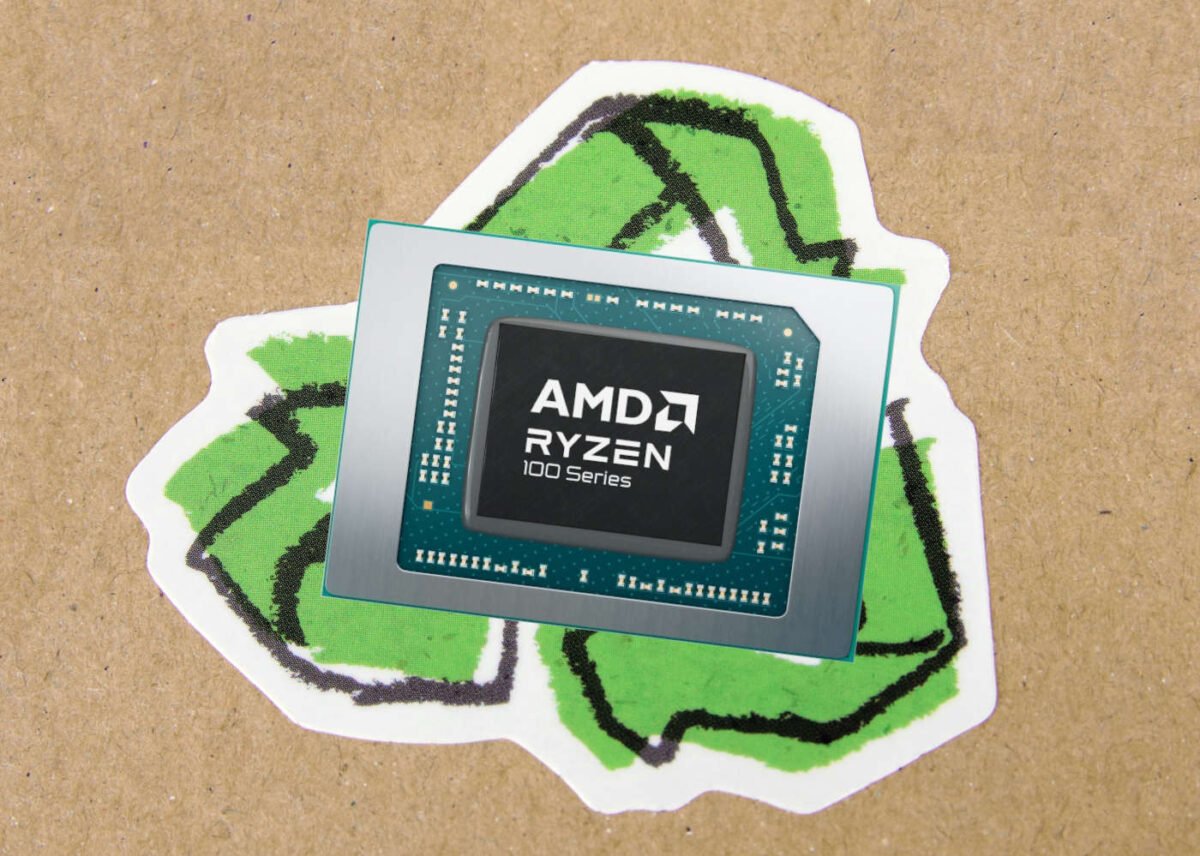
AMD has once more been spotted silently rebranding its old chips, this time under new Ryzen 100, Ryzen 10, and Athlon names. The company has added at least nine CPU models, seven of which are under the Ryzen umbrella and two under the budget Athlon family. All are believed to be rebadged Zen 2 and Zen 3+ mobile chips featuring up to 8 cores and 12 GPU compute units (CUs).
Following the launch of the Ryzen 8000 series, AMD jumped straight to the Ryzen AI 300 lineup, both to avoid the 9000 series name, which was present on desktop, and (unofficially) to get a similar name scheme to Intel’s Core Ultra. This caused confusion to customers who were looking for a new machine. Today, AMD is doing the same thing once more, but this time using old designs dating back to 2021, powered by the Rembrandt and Mendocino architectures. The good news is that AMD doesn’t use the 400 series for these chips, which would have been greatly misleading, slotting them instead in the previously unused 100 and 10 series.
| New Models | Similar to |
|---|---|
| Ryzen 7 170 | Ryzen 7 7735HS |
| Ryzen 7 160 | Ryzen 7 7735U |
| Ryzen 5 150 | Ryzen 5 7535HS |
| Ryzen 5 130 | Ryzen 5 7535U |
| Ryzen 3 110 | Ryzen 3 7335U |
| Ryzen 5 40 | Ryzen 5 7520U |
| Ryzen 3 30 | Ryzen 3 7320U |
| Athlon Gold 20 | Athlon Gold 7220U |
| Athlon Silver 10 | Athlon Silver 7120U |
Targeting around 28W TDP, the Ryzen 100 series is based on the Zen 3+ architecture, offering from 4 to 8 cores clocked up to 4.75GHz, coupled with 4 to 12 GPU CUs and 16MB of L3 cache. The Ryzen 10, on the other hand, leverages the Zen 2 architecture, offering 4 cores, 2 GPU CUs, and 4MB of L3 cache, at 15W TDP.
Understandably, these new releases won’t be any faster than their older counterparts, delivering similar performance and power consumption characteristics. Things may change on the connectivity side, especially regarding USB and wireless connectivity, where some laptop brands may choose to include the latest USB 4 and Wi-Fi 7.
| Model | Clocks | Cores/Threads | L2 Cache | L3 Cache | Radeon Graphics |
|---|---|---|---|---|---|
| AMD Ryzen 7 170 | 3.2/4.75GHz | 8C/16T | 4MB | 16MB | 12CU at 2.2GHz |
| AMD Ryzen 7 160 | 2.7/4.75GHz | 8C/16T | 4MB | 16MB | 12CU at 2.2GHz |
| AMD Ryzen 5 150 | 3.3/4.55GHz | 6C/8T | 3MB | 16MB | 6CU at 1.9GHz |
| AMD Ryzen 5 130 | 2.9/4.55GHz | 6C/8T | 3MB | 16MB | 6CU at 1.9GHz |
| AMD Ryzen 3 110 | 3.0/4.3GHz | 4C/8T | 2MB | 8MB | 4CU at 1.8GHz |
| AMD Ryzen 5 40 | 2.8/4.3GHz | 4C/8T | 2MB | 4MB | 2CU at 1.9GHz |
| AMD Ryzen 3 30 | 2.4/4.1GHz | 4C/8T | 2MB | 4MB | 2CU at 1.9GHz |
For those wondering why AMD would do such a thing? Well, it’s quite simple, really. AMD may still have some stock or manufacturing capacity of its old chips that it wishes to monetise, all while providing partners with a cheaper alternative for budget laptops. So if you are looking for a new and affordable machine in the upcoming holidays, keep an eye out for these.
Aside from the Zen 2 models, which are weak by today’s standards, all the Ryzen 100 variants seem fine, especially for daily tasks. Budget gamers should preferably select Ryzen 160 or 170, mainly due to their noticeably larger iGPU. Just don’t forget to check reviews before clicking the buy button, because you never know.
Source: Looks like AMD is rebranding CPUs again with Ryzen 10 and Ryzen 100 series | Club386